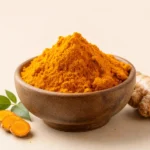
For European buyers sourcing Indian spices, pesticide compliance is often treated as a straightforward exercise: test the spice lot, compare the results with the applicable EU Maximum Residue Levels (MRLs), and release the shipment if it is within limits.
In practice, experienced spice procurement teams know that the more important question is whether the supplier has a repeatable system for controlling pesticide-residue risk across batches.
This distinction matters because spices are agricultural products. Their residue profile can vary with growing region, crop conditions, pesticide use, harvesting practices and the way raw material is consolidated and processed. A clean laboratory report is therefore useful evidence for a particular lot, but it does not by itself demonstrate control of the supply chain.
Under EU Regulation (EC) No. 396/2005, MRLs are established for specific pesticide residues and commodities. For a spice buyer, the relevant limit therefore depends on the specific spice and the applicable residue definition, rather than on a generic “EU pesticide limit.” The European Commission’s Pesticides Database provides the applicable MRL information.
This is where the laboratory report needs to be interpreted carefully.
A result reported as <0.01 mg/kg, for example, does not mean that the residue is necessarily absent. It means that the concentration is below the laboratory’s stated Limit of Quantification (LOQ). Whether that result is satisfactory depends on the applicable MRL and whether the analytical method can reliably quantify residues at the levels relevant to the spice being tested.
For European spice procurement, this makes the testing strategy more important than simply counting how many pesticides appear on a report. A statement such as “500+ pesticides tested” provides limited information without knowing the relevant analytical scope, reporting limits and whether the results can be meaningfully assessed against the applicable EU requirements.
But even a technically sound pesticide report only answers one question: what was found in the sample that was tested?
It does not answer how that lot was sourced.
That is why residue management needs to start before the laboratory. For spices, the relevant controls can extend from selection of the growing region and raw-material suppliers through lot segregation, traceability, processing and sampling, followed by laboratory testing and review before batch release.
The distinction becomes particularly important for repeat business. If one turmeric, cumin or chilli lot meets the required EU MRLs, that provides confidence about that particular lot. A buyer placing regular orders needs confidence that the supplier can achieve the same standard across successive batches.
Historical testing, batch traceability and consistent sourcing controls therefore become valuable alongside the current COA. They help establish whether compliance is repeatable rather than incidental.
There is also a commercial distinction that buyers need to keep in mind: EU MRL compliance is not necessarily the same as meeting a customer’s specification. A spice manufacturer or importer may set internal residue requirements that are more stringent than the applicable legal limit because of its own customer, retailer or risk-management requirements.
For example, a turmeric powder may be legally within the applicable EU MRLs and still fail a buyer’s specification if the buyer has established a tighter internal requirement.
Learn why EU MRL Compliance in Spices goes beyond testing, with focus on maximum residue limits, traceability and consistent supply-chain controls.
This is why the stronger procurement question is not simply: